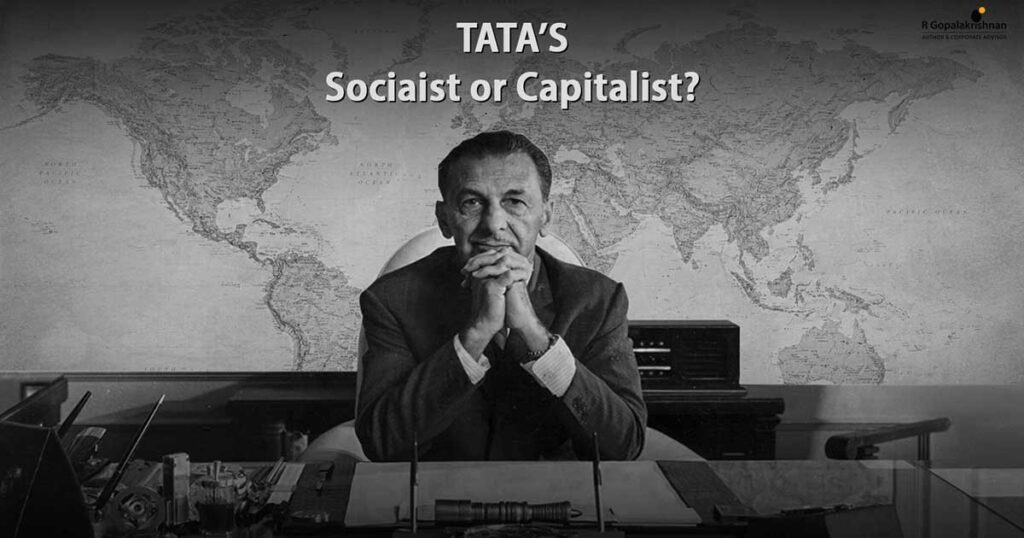
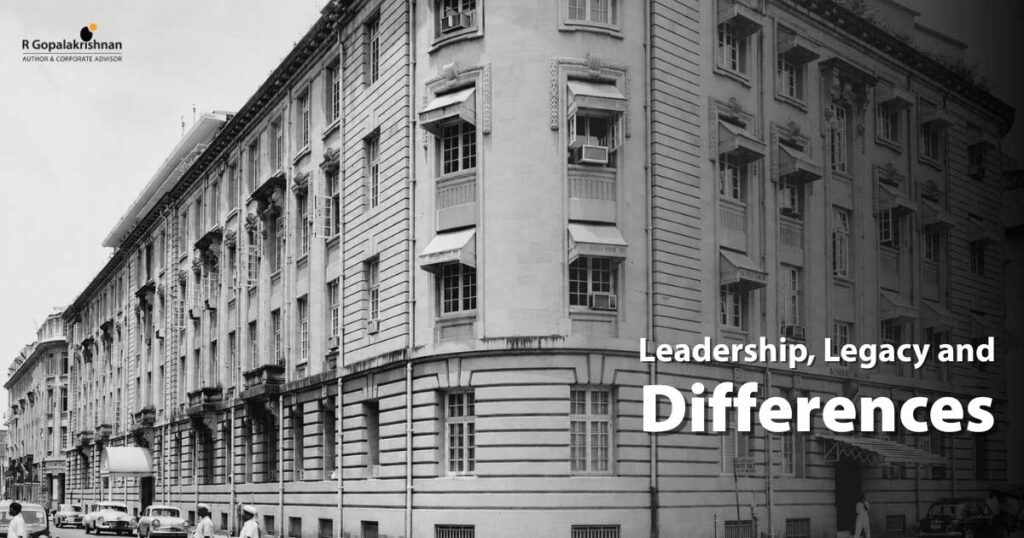
Differences are normal, but how they are sorted out is what is important so that there are no permanent winners or losers.
Media reportage during the last fortnight has been prolific regarding TATA—Chairman of Tata Sons not offering himself for a third term in February 2027, succession speculations, relationships among leaders, leaders’ performance appraisal through google searches, and much more.
Ngram analysis of Tata news reportage in August shows a huge increase of words like governance, transparency, trust and so on. Are recent TATA developments signs of flaws in governance and transparency? Or do they reflect the reality that views can differ among individuals? Society teaches us that differences are normal, but how they are sorted out is what is important so that there are no permanent winners or losers.
The babble has been so intense and assertive that we were reminded of the adage that those who know do not speak and those who speak do not know. The reportage also revived our memories of the Kishore Kumar song from Amar Prem kuch to log kahenge, logon ka kaam hai kehana, chodo bekaar ki baton mein beet na jaye raina.
That the heads of Sons and Trusts had professional differences is not a secret. Whether the differences were small or large, legitimate or misplaced, ego-driven or not, are all matters that only the concerned pair will know. Such a situation can occur between two perfectly well-intentioned and honourable people, and that seems to be so in this TATA case. Indeed, it happens in other relationships like among married couples.
Commonsense and experience tell us that conflicts and differences can be salvaged only through conversation, convergence, compromise, and commitment. Importantly, if salvaging is not possible through reconciliation and readjustment, then a dignified and mutual separation is a valid course. Whatever the facts, top level differences should not affect the institution negatively.
And it is likely that that recent actions have been motivated by precisely this consideration.
History offers many cases where what appeared to be a difference of opinion was not addressed and ended up contributing to undesirable conflicts. Graceful and early resolution is essential, and often the preferred path.
Julius Caesar and Pompey the Great were thick political allies in Rome —in fact, Pompey was Caeser’s son-in-law—until personal distrust, rivalry, and competition for prestige gradually poisoned the relationship. Caeser’s successful conquest of Gaul made him extremely powerful, and Pompey became concerned that Caeser would dominate Rome. Their growing conflict could not be resolved through negotiation or compromise. Finally, in 49 BCE, Caesar crossed the Rubicon and initiated the civil war with rival Pompey the Great.
Around World War I, Kaiser Wilhelm II ruled in Germany, King George V in England, and Tsar Nicholas II in Russia, all related as cousins. Wilhelm’s impulsive behaviour, insecurity, and strained personal relations helped diminish the relationships, leading to the war. Of course, the war was not caused by just family relationships, but personal mistrust among family members lessened the opportunities for compromise.
There are three common patterns suggested by history. First, honour and prestige become key. Second, leaders personalize disputes. Third, miscommunication creates exaggerated perceptions of insults.
In the TATA case, the leaders could not resolve their issues through conversations and convergence, so the differences were extinguished through graceful adjustments. Above all, the leaders have protected their institutions.
However, such episodes attract everyone to analyse and comment. It is in this context that Padma Shri poet, Dr Bashir Badr, wrote Parakhna mat, parakhne se koi apna nahi rahta, Kisi bhi aine mein der tak chehara nahin rehta (If you analyse too much then you will lose relationships, just as a mirror does not hold a reflection for long).
Conspiracy theories circulate, where none or some may be true. In this TATA case, some view it as a Trusts versus Sons dispute, some as a Parsi versus non-Parsi dispute, some as a promoter versus professional dispute, some as a capital allocation discipline issue. It is fruitless to criticize, analyse and paralyse, based on assumptions.
Two facts are clear. First, as per well-established TATA retirement policies, Chairman Tata Sons would anyway have given up executive positions from Jun 2028 upon turning age 65. Therefore, the board must have had some succession plan for June 2028. Second, renewing the Chairman’s contract for a third term was a unanimous decision of the Trust members in September 2025, seventeen months before even the ongoing contract would come up for renewal. It is this unanimous decision of the Trusts that led to the likely change in the tenure and dates of the Chairman’s succession. The matter appeared on the Tata Sons board agenda at the instance of the Trusts in February 2026. It appears that one director expressed reservations regarding certain economic and business issues. In this background, bearing the interests of the employees, investments and business of Tata Sons, the Chairman has gracefully announced his timely decision not to seek re-election for a third term. The die has been cast, and attention must change to effective succession.
TATA is a rare national jewel. It is a business group that most Indians respect and love. How many business enterprises around the world can you think of that people respect and love? You can count them on your fingertips. The TATA family—employees, retirees, vendors, shareholders and families would exceed the populations of Belgium, Netherlands, and Switzerland combined.
Let us, therefore, wish TATA all the best in finding a successor and returning the enterprise to its mission of creating employment, family advancement, and national prosperity.
Gopalakrishnan and Ishaat Hussain*
*The writers are both retired directors of Tata Sons with a combined experience of working for Tatas of over half a century)